
Insulated roller shutters for workshops and industrial units
An insulated roller shutter uses double-skin laths filled with insulating foam, and it suits heated workshops, staffed units and goods doors next to a work area. It slows heat passing through the curtain better than a single skin. Supplied and fitted with an electric drive, it costs £2,220 to £5,100 inc VAT for a standard opening.
Inc VAT. Business price £1,850 to £4,250 + VAT at 20%. Supplied and fitted, electric, standard opening.
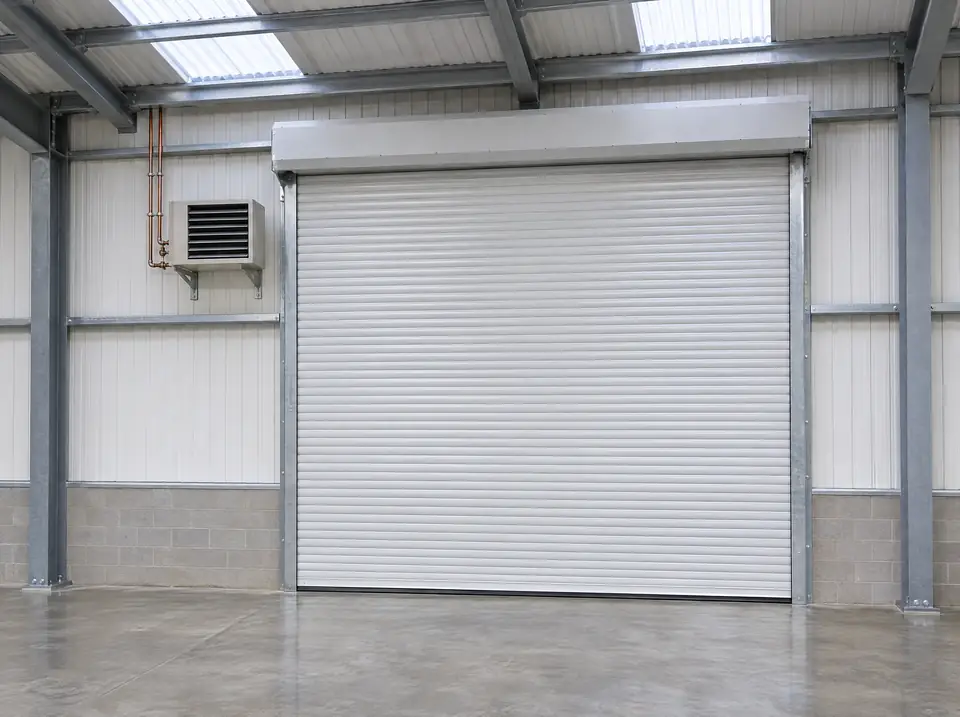
How much does an insulated roller shutter cost?
An insulated roller shutter costs £2,220 to £5,100 inc VAT, supplied and fitted with an electric drive. Openings beyond that are quoted after survey.
The typical lead time runs 2 to 3 weeks from survey sign-off. Differences inside the price range come mainly from size, the coil position and the duty the drive has to handle.
When is an insulated shutter worth choosing?
Choose insulated when people work near the door or the unit is heated, and a thin steel curtain is the weak point. A lockable store with nobody in it rarely needs one.
Keep two limits in mind. The shutter only insulates while it is down, so a door left open all shift gains little. Gaps around other doors, rooflights and walls can matter just as much, so look at the whole unit first.
We give no energy saving figure here, because that depends on your building and your habits. If a landlord or specifier needs a thermal value, ask for it before you accept the quotation.
Does an insulated shutter need more headroom?
Usually yes, because filled laths are thicker and roll into a larger coil than single-skin laths. The curtain is also heavier, so the drive and fixings need sizing for it.
That can rule out a tight head of opening, or push the coil onto the face of the wall. The survey measures the space above and at the sides, and checks that the coil clears lights, pipes and racking.
Is an insulated shutter the same as a sectional door?
No. A roller shutter coils onto a barrel above the opening, while a sectional overhead door runs back along tracks under the roof. We do not sell sectional overhead doors on this site.
A roller shutter keeps the ceiling space clear, which helps if you have cranes, racking or low lights near the door. It also shares the same safety duties as any other powered shutter, so a risk assessment sets the protection needed for your opening.
Which options can you choose?
| Option | What it is |
|---|---|
| Insulated curtain | Foam-filled double-skin laths across the full opening. |
| Powder coat | A RAL colour for the curtain, at £234 to £474 inc VAT per shutter. |
| Remote handsets | A pair of handsets with their receiver, for £174 inc VAT. |
| Higher-duty drive | A heavier drive for an insulated door that runs through the working day. |
Quick answers on insulated roller shutters
How much heat does an insulated shutter keep in?
We give no figure here, because it depends on the product, the building and how long the door stands open. Ask for any thermal value you need before you accept the quotation.
Will an insulated shutter lower my heating bill?
We cannot promise that. The shutter slows heat passing through the curtain only while it is closed, and your bill depends on the whole building and how the door is used.
Is an insulated shutter any more secure?
Not automatically. Filled laths are chosen for heat, and double skin does not make a shutter a rated product. Check any rated product in RedBook Live.
Can an existing shutter be insulated?
Generally no, because the laths are the insulation. The usual route is to replace the curtain or the whole shutter, and the extra weight means the drive and coil space must be checked first.
Does an insulated shutter need servicing more often?
No fixed rule applies, because the schedule comes from the manufacturer's instructions, use and condition. Follow those and keep service and test records.
What else might you need?
Guides to read first
Where do you fit insulated roller shutters?
Across the UK. Pick your area for local planning notes and places.
- Bedfordshire
- Berkshire
- Bristol
- Buckinghamshire
- Cambridgeshire
- Cheshire
- Cornwall
- Cumbria
- County Durham
- Derbyshire
- Devon
- Dorset
- East Riding of Yorkshire
- East Sussex
- Essex
- Gloucestershire
- Greater London
- Greater Manchester
- Hampshire
- Herefordshire
- Hertfordshire
- Isle of Wight
- Kent
- Lancashire
- Leicestershire
- Lincolnshire
- Merseyside
- Norfolk
- North Yorkshire
- Northamptonshire
- Northumberland
- Nottinghamshire
- Oxfordshire
- Rutland
- Shropshire
- Somerset
- South Yorkshire
- Staffordshire
- Suffolk
- Surrey
- Tyne and Wear
- Warwickshire
- West Midlands
- West Sussex
- West Yorkshire
- Wiltshire
- Worcestershire
- North Wales
- South West Wales
- Gwent
- Gwynedd and Anglesey
- Bridgend, Merthyr and Rhondda
- Powys
- Cardiff and the Vale
- Swansea and Neath Port Talbot
- Aberdeen and Aberdeenshire
- Argyll and Bute
- Ayrshire and Arran
- Dumfries and Galloway
- Dundee and Angus
- Edinburgh and the Lothians
- Fife
- Forth Valley
- Glasgow and Clyde
- Lanarkshire
- Highlands
- Moray
- Perth and Kinross
- Scottish Borders
- Scottish Islands
- County Antrim
- County Armagh
- County Down
- County Fermanagh
- County Londonderry
- County Tyrone
Have an opening to price?
Your guide figure comes from the size of the opening and how often it runs.